
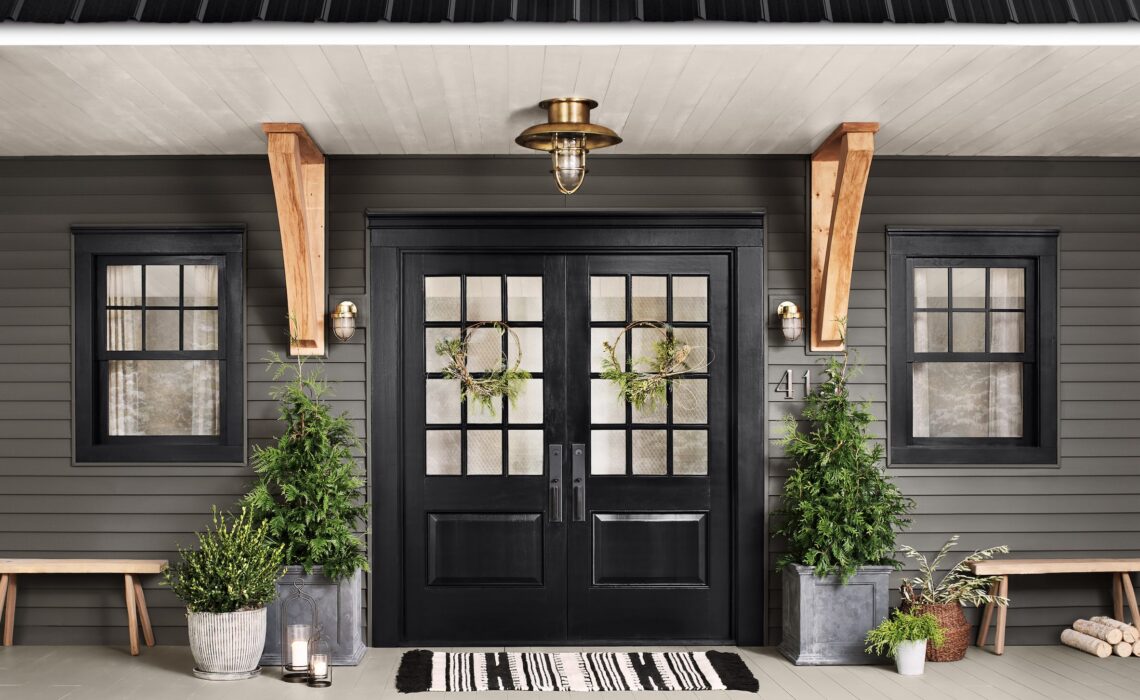
Four tips to help homeowners make the most of the rising trend in exterior living spaces.
Listen to audio version of this article
If you’ve been asked to paint more patios, pergolas or outdoor kitchens lately, you’re not alone. Exterior living spaces – exterior “rooms” painted, styled and used like an interior room – have become one of the hottest trends among homeowners in the last few years.
This trend really began to take off during the COVID-19 pandemic, says Ashley Banbury, Color Marketing Manager at Sherwin-Williams. With many people stuck at home and unable to travel to new places, the idea of creating “new” spaces in their own homes became appealing. Given square footage limitations, it’s difficult to build a new interior room. It’s easier to renovate or expand an existing exterior space to create a personal getaway.
“People found an opportunity to extend the footprint of their home and really expand their living spaces to a patio or a deck
outdoors,” Banbury says. “They saw it almost like gaining extra square footage – a way to capitalize on space that they weren’t using as much. It became a way for them to connect the personal style of their interior home to their exterior.”
Since then, she says, the trend has only grown as homeowners realized how much they enjoyed personalizing these exterior living spaces. This makes it increasingly likely that a painter’s next job might involve painting one of these “outdoor rooms.”
But with these unique spaces splitting the difference between interior and exterior, how can you best help your customers select paints and colors with confidence with these spaces? Banbury offers these four tips to create stunning exterior living spaces.
1. Take inspiration from fixed features
When considering good color choices for exterior living spaces, Banbury says one of the best places to start is
with fixed features.
“Do you have any type of natural stone, brick, or cobblestone in the space?” she asks. “Do you have an exterior wall? Is there wrought iron? What are the wood tones in the shutters or the patio? All of these elements should be considered when you select the exterior color. It should help bring all of these elements together.”
One way to start could be to consider the tone of any brick, stone or wood in the area, and find a color that matches or complements it. Tools like the SherMatch®+ app makes it easy to scan surfaces, capture accurate color information and view coordinating or similar colors.
Colormix® 2026: Help your customers find their favorites from this year’s hottest colors
2. Take cues from the environment
Another important factor to consider is your environment – both the neighborhood and the weather. Considering these factors is nothing new for contractors who handle lots of exterior work. But exterior living spaces can add an extra degree of complexity to the process.
“Does the homeowner want this space to complement their neighborhood, or do they want to stand out?” Banbury says.“There’s a lot of great ways you can stand out, whether it be through shutter colors or a door color to have some fun.”
Likewise, make sure the homeowner has thought through their area’s weather. Though exterior living spaces may be used and decorated like an interior space, they are still subject to rain, snow, wind, humidity and more.
A bright white might look nice – but in a rainy environment, it might not disguise dirt or mud that naturally kicks up over time; consider a midtone instead.
A dark or black color might really pop outside, but will it attract and absorb an uncomfortable amount of heat? If you’re in the Southwest, for example, you’ll want to think carefully about that. Considering your environment will help ensure your customer is satisfied.
3. Warm and dark neutrals are safe choices
When in doubt, it’s hard to go wrong with choosing a neutral. That’s one reason dark and warm neutrals have been rising in popularity when it comes to exterior spaces.
“When we think of neutral colors, we think of whites, but black is still a neutral, too. It’s just a very unexpected neutral, which makes it feel modern and fresh,” Banbury says. “Tricorn Black SW 6258 is one of our top exterior colors. But we’re starting to also see the dark blacks toned down a bit. The trends have evolved, and Charcoal SW 3063 and Iron Ore SW 7069 are also becoming very popular.”
Warm neutrals have been growing in popularity in interior spaces. One such shade, Universal Khaki SW 6150, is the 2026 Sherwin-Williams Color of the Year. Given how exterior living spaces incorporate both interior and exterior color styles, these warm neutrals are also perfect choices for an exterior space.
“As we see colors warming up in the interior, that’s also happening outside,” Banbury says. “For example, Universal Khaki is not only a great interior color, but also a beautiful exterior color. We see color trends shifting that way. People want that warmth.”
4. Try before you buy
If the homeowner is expressing indecision or concern over choosing the right color, help them arrive at a decision faster by using a Sherwin-Williams color tool.
In the early stages of deciding on the right color, the free Color Expert™ app can be a great resource.
“You can upload a picture of your home and then place different colors on it,” Banbury says. “You can mess around and play with different options, so that your homeowner can start to visualize it for themselves.”
If your client has narrowed their options down to just a few colors, buying Color to Go® sample pots for the colors they’re considering can be an inexpensive way to reach the right answer quickly. You can paint these samples directly on the exterior spaces they’re thinking about, allowing them to see exactly how it’ll look – whether it matches the features, how it looks in the light, and anything else they’re concerned about.
Listen to audio version of this article
©2026 Fusable. Photography courtesy Sherwin-Williams.